

Wheelchair Ramp Design & Planning Guide
Wheelchair Ramp Design: Quick Planning Summary
Quick answer: A well-planned wheelchair ramp starts with the total entry rise, doorway and door swing, landing area, available route, and slope. Document those details with a few photos and a simple sketch so a Handi-Ramp specialist can help match the right access solution to your home.
Talk with a ramp specialist: 847-680-7700
This guide turns the original Handi-Ramp measurement worksheet into a clear, step-by-step way to prepare for a ramp recommendation.
Before you begin: please take 3–5 clear photos of the entrance, stairs, landing, and the direction a ramp might run.

1. Identify the Door
Tell us whether this is the front or back entrance, if there is a screen door, which way each door swings, and which side the handle is on. 2. Measure the Entry
Capture the stair count, individual rise and tread depth, landing size, door opening, threshold, and available width. 3. Sketch the Route
Show the doorway, steps, sidewalk or driveway, building lines, and obstacles such as trees, fences, flower beds, or slopes.Door & Entry Details
As you look into the house, note the direction of each door swing and the side of the handle. A screen door can change the landing and clearance we need.

Door checklist
- Front or back door
- Door swings in or out
- Knob / handle on left or right
- Screen door: yes or no
- Screen-door handle on left or right
Threshold checklist
- Distance from top stair to threshold
- Threshold height
- Threshold width
- Distance from threshold edge to door
- Clear door opening width
Stair & Porch Measurements
Measurements can be approximate for the first conversation. Our ramp specialists will use them to identify the right configuration and what to verify next.

Stairs
- Total number of stairs / risers
- Individual riser height
- Individual tread depth
- Width of stair
Landing & Door
- Porch / landing width
- Door opening width
- Left edge of landing to door
- Threshold dimensions
Surroundings
- Rise or slope of yard, walkway, or driveway
- Sidewalk / driveway dimensions
- Trees, fences, beds, mounds, posts, or other obstacles
Sketch the Site & Ramp Path
A quick overhead sketch helps us see the best direction for the ramp. Include the building, doorway, steps, sidewalk or driveway, and obstacles such as trees, mounds, fences, flower beds, or posts.
Add approximate dimensions wherever you can. This gives our ramp experts the context they need before recommending a configuration.
Download the PDF Worksheet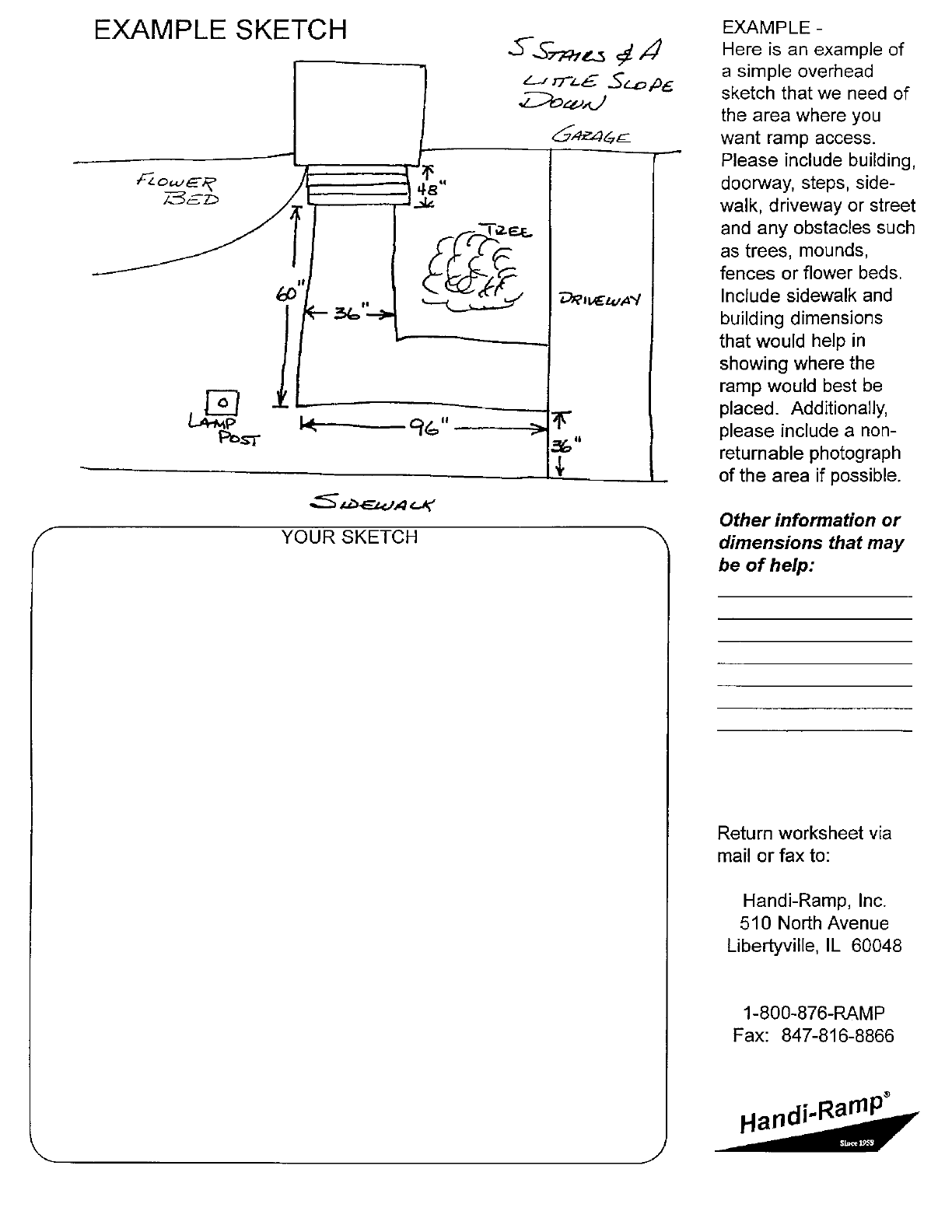
Wheelchair Ramp Planning FAQs
Use these practical answers with the worksheet, your measurements, and route photos before you call.
How do I estimate wheelchair ramp length?
Start by measuring the total vertical rise from the ground, sidewalk, or driveway to the entry. A 1:12 slope is a common ADA planning reference for public and commercial routes, but a home layout can have different site constraints, product requirements, and local rules. The available run, landings, turns, and handrails all affect the final plan. Read the ramp-length guide for initial sizing context.
What measurements are needed for a ramp recommendation?
Record total rise, stair count, individual riser and tread dimensions, threshold height, doorway width, landing size, door swing, and available route. A quick overhead sketch plus wide photos of the entry, sidewalk, driveway, and obstacles gives a ramp specialist the context needed to recommend a configuration.
Does the way a door opens affect ramp design?
Yes. An inward- or outward-swinging door and any screen door can change landing clearance and the route a ramp needs to take. Marking door swing and handle location helps avoid a layout that blocks access.
What photos should I send before calling?
Send wide photos of the doorway, steps or porch, and the path from the entrance to the driveway or sidewalk. Include obstacles and grade changes. The full route matters more than a close-up of the stairs alone.
When is a portable ramp a fit versus a modular ramp?
Portable ramps can work well for shorter, temporary, or lower-rise access needs. A modular ramp is often a better fit when the route needs more length, landings, turns, handrails, or a more permanent layout. The measurements and intended use determine which option is appropriate.
What should I have ready when I call Handi-Ramp?
Have the completed worksheet if possible, your measurements, route photos, and notes about who will use the ramp and how often. Call 847-680-7700 to discuss the next step with a ramp specialist.
Ready for a ramp expert to review your entry?
Send your photos and measurements to our team. We will help determine the ramp option that best fits your home and access needs.